
An honest critique without negative undertone
By now, sitting on the back of a motorbike is no fun anymore. Neither is camping in the jungle of North Peru, it never really was. Yet, looking back, it is always less problematic than in the very moment. Sitting on a porch, writing under a roof while the rain falls, makes up for the dragging ongoing in a humid jungle. Let’s go back to where I was in my previous post.
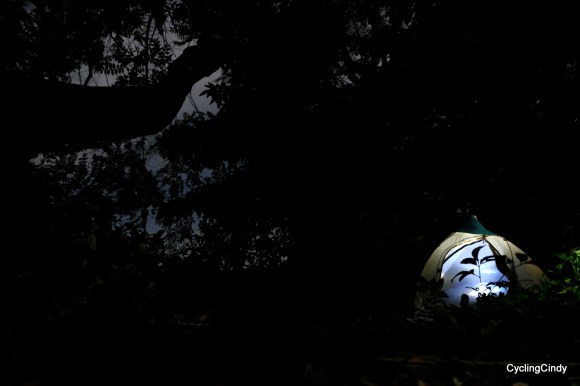
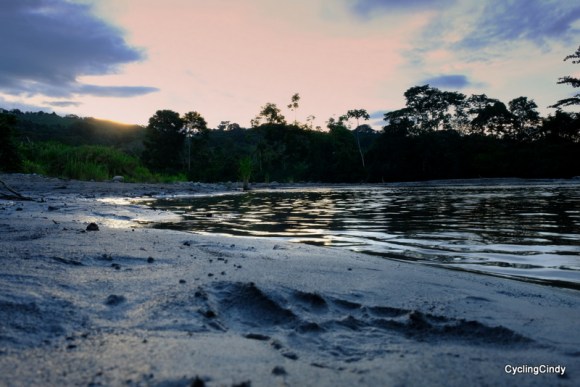
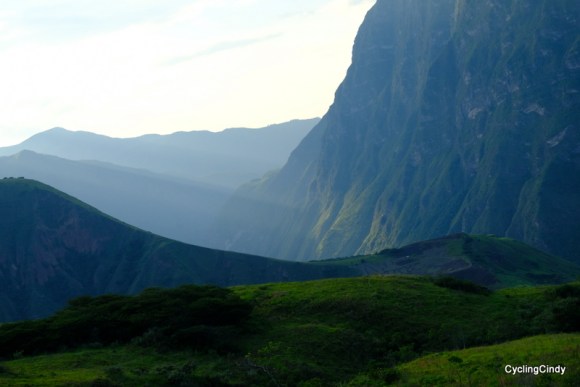


Examples of jungle camp spots
7 camp spots follow (number 1 and 2 are mentioned in an earlier post). The highest number we ever camped in one go. It sort of wrecked us.
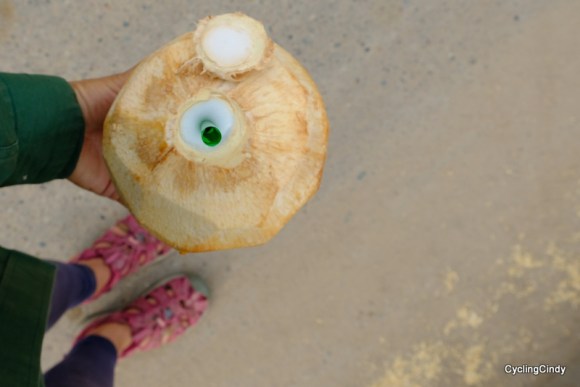


Camp 3. We end up behind a house for sale, passing trucks loud as if whales barging through.
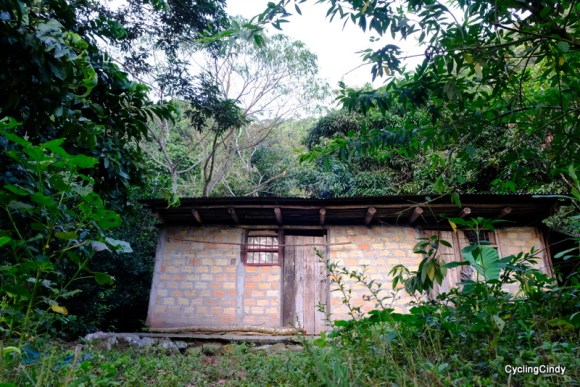


- Our own private toilet!
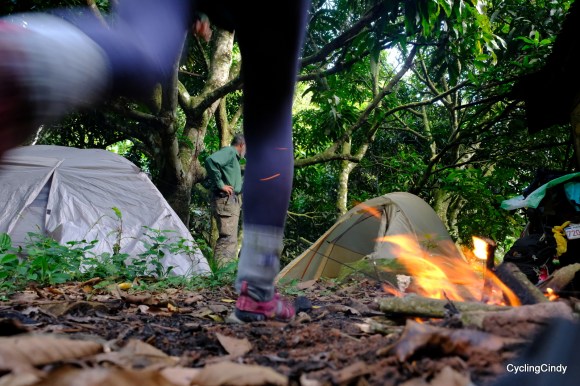
Camp 4 and 5. Veering far off the main road, we end up in a patch of jungle with a river below. All around us are people doing things with the river and because we do not want to be seen we try to sneak in to the river or go at dusk. We keep a low profile and wonder whether Peruvian people would really be annoyed with us bivouacking here? It is probably our North European wish to be unseen and enjoy full privacy.



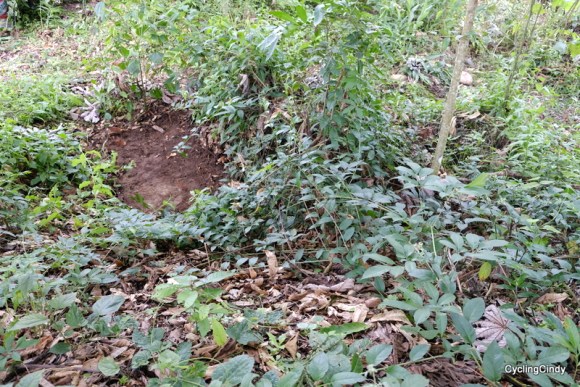
- We need to clear the undergrowth before we can pitch our tents
The higher hill towns Pomacochas, small and filled with authentic farmers, become bigger at Bagua Grande, seemingly the hubs to far flung Amazonian settlements. Cacao, coffee-beans and corn-kernels, lays alongside the road to be sun dried. I wonder how ‘certified’ chocolate actually might be? Most of the cacao is delivered by collectors who resell to bigger companies. Cacao for ‘certified’ chocolate can come in a single plastic-made jute bag, dried in the sun along the roadside, the beans turned around with bare feet or a shuffle tool. Often chicken wade through, trying to pick a grain from it.


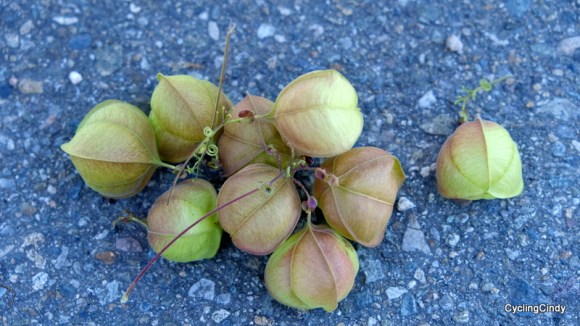
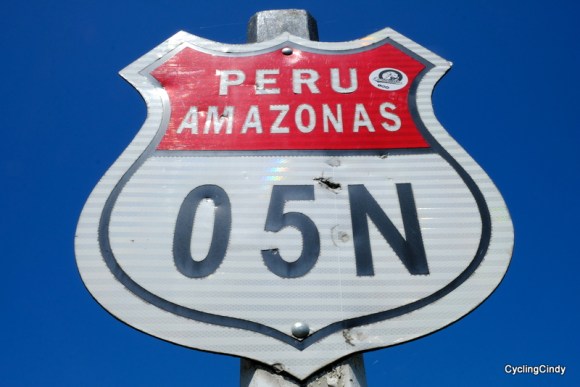

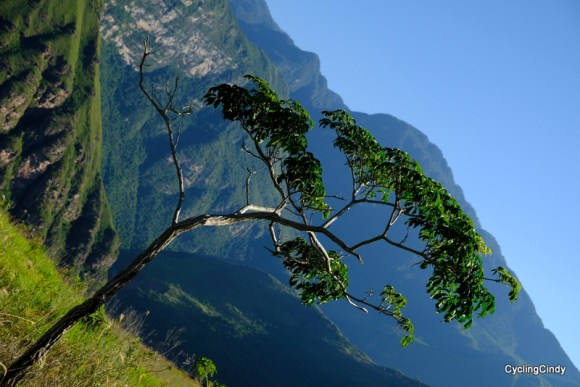
I am impressed at the stretch between Moyobamba and Yambrasbamba District, the highest point 2370 meter altitude, cruising through Bosque de Proteccion Alto Mayo.


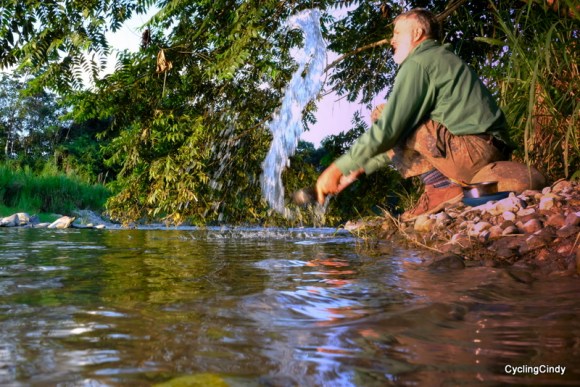
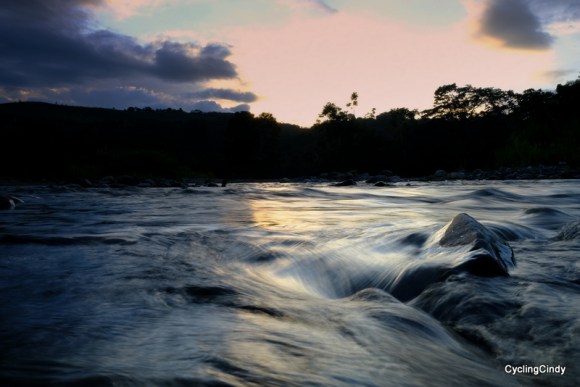
On a glorious bright day we are crossing this forest. After many cloudy and rainy days we enjoy some relief and when that is being surplussed by the absence of the long string of houses and speed-bumps and Lycra leggings, I am finally content. But not fully, as we can impossibly stop on the narrow road. Now, photography from a motorbike is a hassle: I am tired of getting on and off the motorbike, putting my sunglasses away, taking my helmet off and search for a good composition. Often the ideal composition I have seen on the back of the motorbike is passed by the time we stop. Geo can impossibly stop when I tell him to stop. In fact, photography is an intimate activity; its best done on your own, with plenty of time.


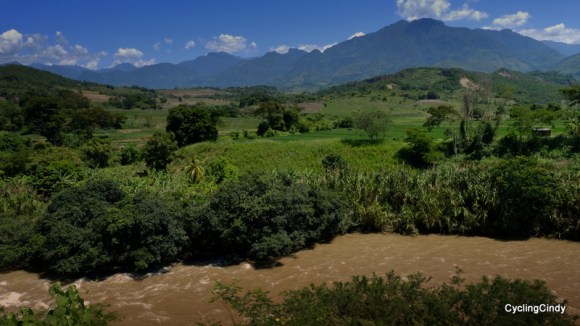

The road has on one side almost a vertical slope and on the other an equal vertical down. There is no shoulder and hardly any flat surface. The route acts in a serpent movement and since this is still the national N5 road, gasoline trucks and all else collects here. We can not stop when ever I tell Geo to.

Without having made one photo of this only stretch of genuine beauty, I can tell you that life seems not too hard on people living in the jungle. I guess the task which makes our life so difficult, is not present here. It is the Western mind that believes it needs to be successful, worthwhile and progressive. This leads to fantastic inventions indeed, yet here in the jungle people often sit in front of their hut. Too humid to even spark the start of a process to creative thinking.
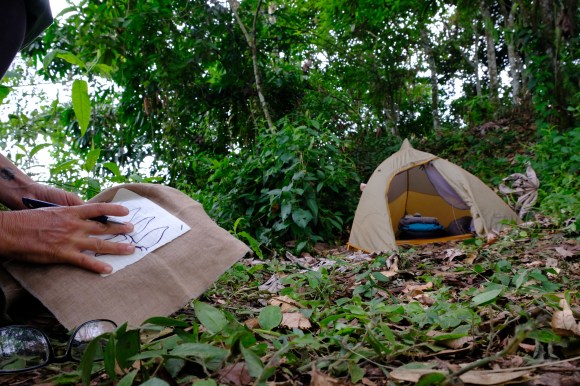

I can not do nothing, and that’s where embroidery comes in handy. In contrast people here can do simply nothing.
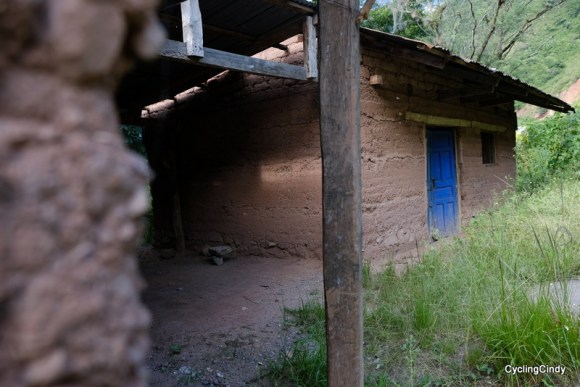
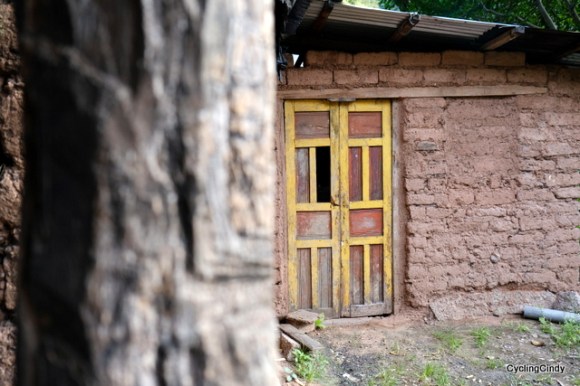

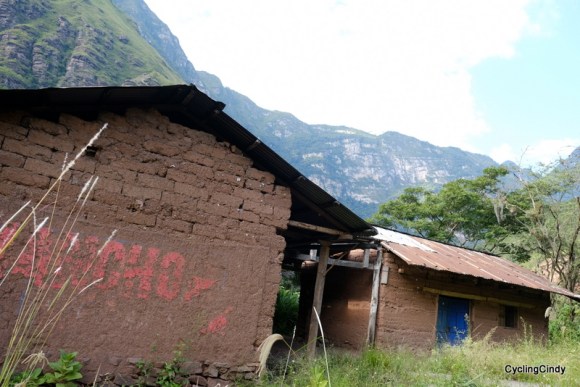
Further up we notice mules and donkeys are used to work alongside humans. Huts become houses dark and earthy, originated in unity with nature, build with what earth provides. Nature still the giver, the taker untill now the submissive. We both could live here.


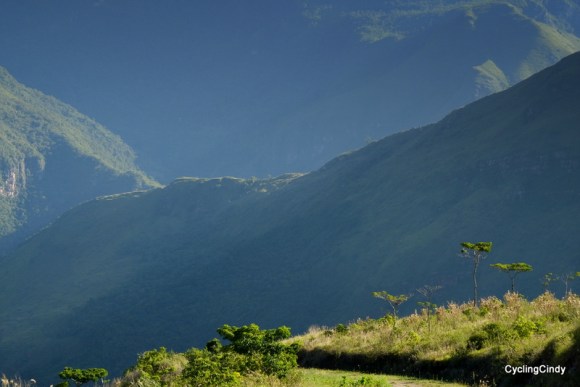
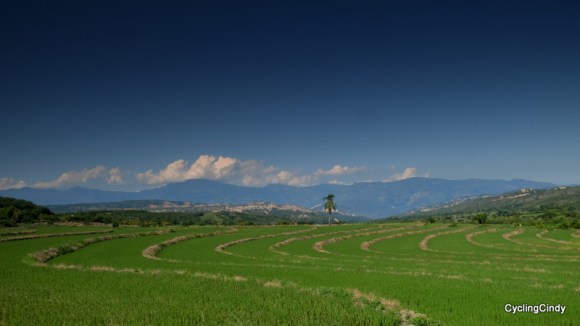
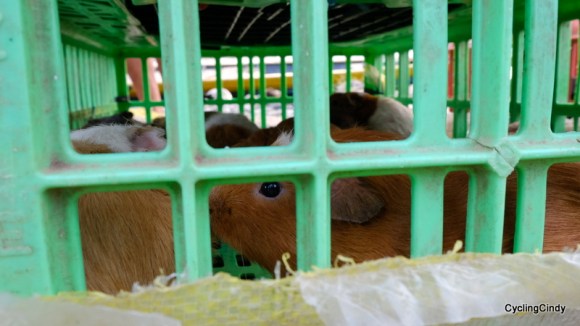
I guess the little patch of corn, cacao and coffee drying in front of their huts is sufficient for the little monetary income the local people here need. Hardly visible through the jungle foliage I see lots of agriculture, sometimes vertical planted. Small plots with manioc, sugarcane, bananas in all colors, pineapples, papaya, coconut, rice and beans. It goes to a wholesaler or is sold at the roadside. Men work till an old age, often in rubber boots, a machete in hand and a leathery, wrinkled skin, perhaps content to have something to do. People keep small animals. The smallest we witnessed called cuy, cavia. For about 10 euro you can buy one. Though it cost you 15 euro to have it ‘good to go’. That is, on a plate.


Camp 6. We end up at a path far above the road. The track leads to a hamlet yet seemingly more mototaxi’s than inhabitants pass. The drivers and passengers wave and call out merrily to us, having erected the tents on their going-through. At night the traffic continues, yet luckily for us, less though.


Camp 7. We end up at river Chinchipe. Two rivers come together at this spot. I checked the map and figured a track leading into the countryside with a dead-end must be a quiet spot. When we get there, a truck is parked at the shore, working on one or another task. Women are washing laundry. Geo, who went ahead over a hard packed trail of wheel-prints, leads me further along the shore. Upon reaching the spot, Geo is rubbing the sweat and mosquito itching of his weary body in the river. His smile and happiness about this spot speaks clearly and I don’t want to spoil this.
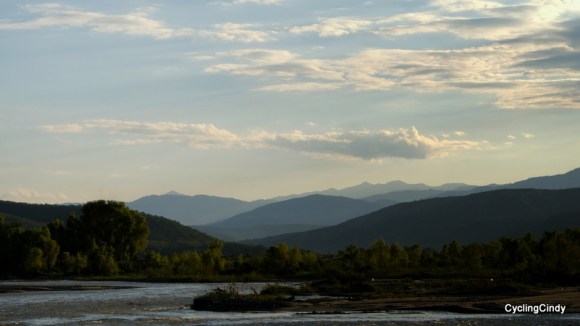

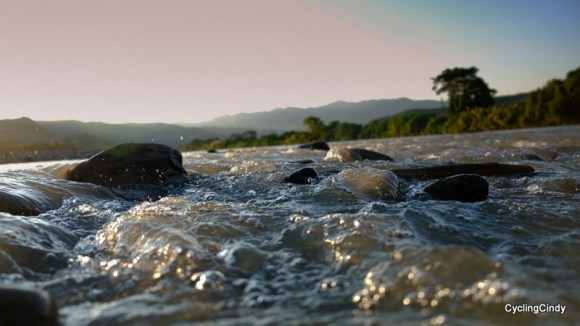
Opposite the river are a few houses. People are bathing. Rubbish fills the spot. The town Jaén is described as the hottest in the jungle, and indeed it is positioned at a lower altitude in a semi desert-alike nature.
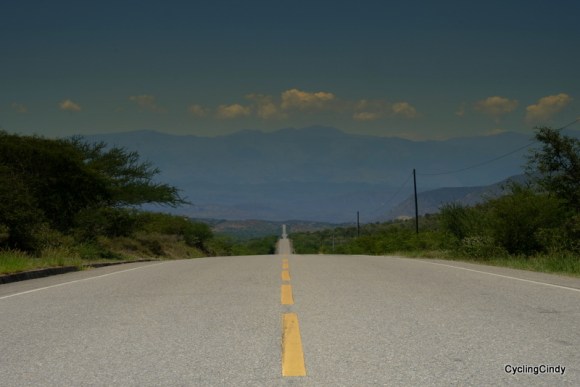
I am tired beyond measure. The heat drags me down. My body suffering maniacal itching. All I long for is a bath in the river and so I follow Geo his good example. Nothing more refreshing than a river bath. A long boat with outboard-motor slides along, the man waving friendly, docking right beside me. I am dressed for this sort of unexpected surprises but duck down a bit lower into the river when two guys roll their motorbike in the boat.

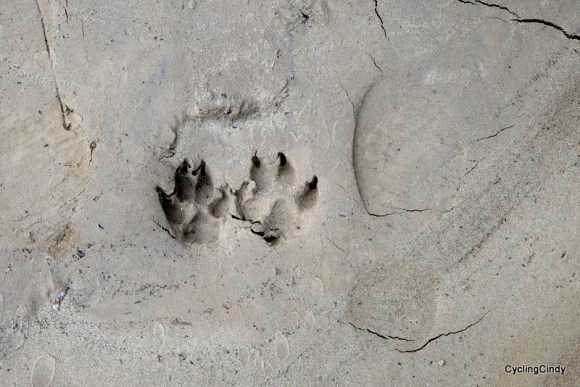


When I am trying to locate a painful hardened spot in the saddle region, a taxi has come to a halt very near to me. Because of the loud sound of the river it went unnoticed. I am sure my grooming was easy to view at a meter distance.


Not much later we discover we have set up camp at the landing spot of a ferry crossing, done by long wooden boats. All evening we have customers for this transport and throughout the night, somehow, the ferry keeps bringing customers to and from one shore to the opposite.

Light pouring in our tents on and off. Motors running. Mototaxi’s coming and going. This is the crossing into the Amazon, from here on all traffic continues eventually by boats. But why it has to continue in the night is a question with an unknown answer to us.

At 6 in the morning when I try to make a fire from driftwood, wood which I first have to cut into thinner strips, the silence and quietness, apart from the raging river, is short lived. I stop my chai making and watch a pig being tied. Needless to say that this does not go without a beep.

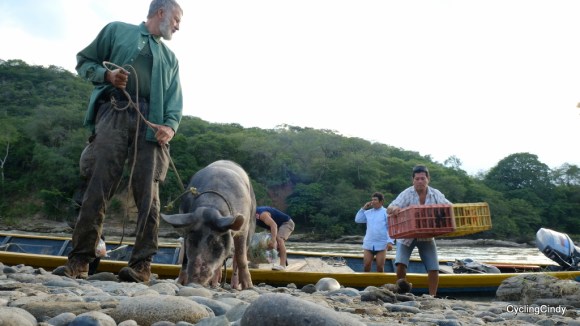

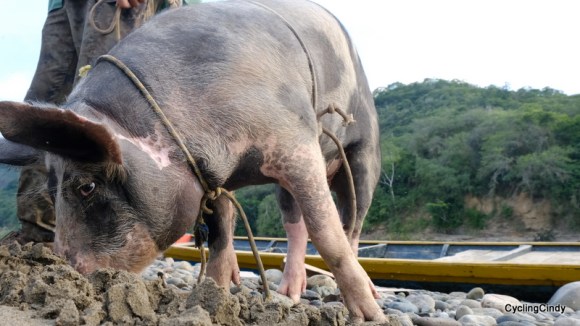



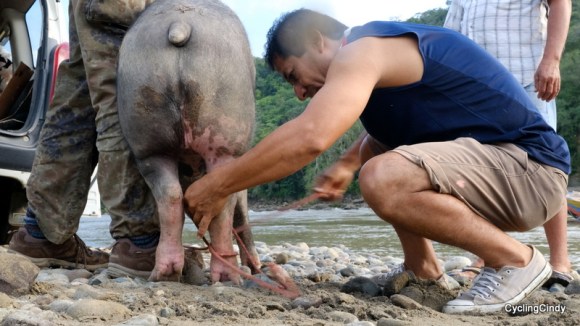
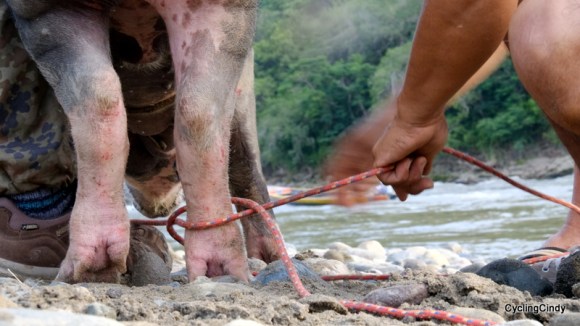

In fact, despite the visible suffering of the pig, it instantly lift us out of our own irritations. Geo start assisting.
After that, we change spots to have breakfast out of view of the ferry strip. Under a canopy of leafy trees we notice how weary we are. How tired after a sleepless night, after interrupted night sleeps before. How fed up with the constancy of itching. More than a month Geo suffers diarrhea and now, again, he feels nauseated. I am tired and all I want is a day off. Yet, I don’t want to stay in a mosquito infested camp neither in a hotel with the intensity of televisions and honking all around, nor do I fancy driving on by motorbike. All Geo wants is a bed to rest.


In our tiredness we drive in a state of numbness to San Ignacio. We check into the largest hotel and 10 minutes later I ask the reception for a doctor visit. Geo is glowing hot lying under covers, shivering from cold and hardly being able to communicate.
Hardheadedness a characteristic we both harbor, we drive on 2 nights later. Geo is not fully recovered but he desperately wants to escape Peru. And so do I. We found out Geo suffered a bacterial infection and because of this, we realize he never really got altitude sickness but simply his weakend body had a harder time to deal with the height.
We seem not to be able to rest decently, we can not find camp spots with close by places to stock up, neither we like the towns and their noisiness. We are either in a wondrous place to camp, high up in the Andes, without enough water and too far from any resources. Or we are somewhere we desperately want to be gone from. Only twice were we able to stay two nights but then the natural environment is not making it easy for us.

In fact, motorbike travel goes too fast. There is too much to process, too much beauty in a short time, too much noise, too quick a changing of surrounding. A friend of mine said in an email: ‘Traveling by motorbike is in many ways much easier than riding a regular pushbike, but knowing you I am sure you are making it very interesting.’
January 2020. Naranjos, rio Utcubamba, Tia Lanco, Panamal, Las Juntas, San Ignacio, Pomacochas, Bagua Grande, Moyobamba, Yambrasbamba District, Bosque de Proteccion Alto Mayo, river Chinchipe, Jaen

 Cycling Cindy
4 replies on “The Selva, Jungle of Northern Peru (2)”
[…] 5: The Selva, the jungle of Northern Peru (2), Naranjos, rio Utcubamba, Tia Lanco, Panamal, Las Juntas, San Ignacio, Pomacochas, Bagua Grande, […]
LikeLike
[…] Click the photo to go to post ‘The Selva, Jungle of Northern Peru’ […]
LikeLike
You see, rightat thaitwhere you say you have to lear the undergrowth….. hammocks! No need to do that just need two or more trees each hammock as you can stay. No trace afterwards, does not need to be level or even dry. I keep thinking for my self they have so much flexibility and with a good tarp even the bike and kitchen can be covered from rain, sun and wind whereas a tent whilst more private for sure but is the sun hits it is a hot box so not that useful on rest or craft, art or bike servicing days. I have to find mine because I am itching to try it out camping/riding. I also haven’t figured out the rigging for the tarp yet. You know for the under blanket, I am thinking of trying some thin highdensity parcel packing foam. I see this often discarded in various thicknesses from 1mm all the way to 4mm. It wont pack down much but it could be a good experiment.
LikeLiked by 1 person
Yeah, I don’t know. For me, it’s a no. For Geo, it could be a yes. I simply sleep on my belly most, so a hammock is therefor a NO! But for many other reasons, or some, at least, it is a yes. Definitely!
Usual, the sun is not a problem. I either set it up in the shadow or the nights are cold. I am always able to manage this, or simply leave the next morning, what is usual the case anyway.
Do you have a home where to store everything? It seems so…
A tarp can also be made of the very thin but strong white material found in builders markets. Its a sort of crispy wrapping or protection material.
Greetings Cindy
LikeLiked by 1 person